
UNESCO Natural World Heritage Sites: Protecting the Planet’s Most Remarkable Places
From coral reefs and tropical forests to mountain ranges and vast deserts, the world’s natural landscapes hold extraordinary beauty and ecological importance. UNESCO Natural World Heritage sites are places recognized for their exceptional value to humanity and the need to protect them for future generations.
What Is a Natural World Heritage Site?
The United Nations Educational, Scientific and Cultural Organization (UNESCO) administers the World Heritage Convention, an international agreement adopted in 1972. Under the convention, countries nominate places for inclusion on the World Heritage List. A site must demonstrate “Outstanding Universal Value”—meaning its importance extends beyond national borders and matters to people around the world.
Natural sites are assessed against four criteria. They may be recognized for their exceptional natural beauty, their importance in showing major stages of Earth’s history, the ecological processes they support, or the habitats they provide for threatened species and biodiversity. A place must also meet standards for integrity and have effective plans for protection and management.
Examples Around the World
Natural World Heritage sites are found across every region. Some are celebrated for their scenery; others are vital to the survival of species or the study of Earth’s past.
- Yellowstone National Park, United States: Known for its geothermal features, including geysers and hot springs, as well as forests, rivers, and wildlife.
- Galápagos Islands, Ecuador: A volcanic archipelago whose distinctive wildlife and ecosystems have contributed significantly to the study of evolution.
- Great Barrier Reef, Australia: A vast marine ecosystem containing coral reefs, islands, and habitats for an exceptional range of marine life.
- Serengeti National Park, Tanzania: A large savanna landscape known for its wildlife and the seasonal movements of grazing animals and their predators.
- Ha Long Bay–Cat Ba Archipelago, Vietnam: A seascape of limestone formations, islands, and marine environments.
- Mosi-oa-Tunya / Victoria Falls, Zambia and Zimbabwe: A dramatic waterfall and river landscape shared by two countries.
Why These Sites Matter
World Heritage recognition can raise awareness, encourage international cooperation, and support conservation planning. These places can also provide important opportunities for scientific research, education, and responsible tourism. For local communities, a site’s natural and cultural connections may be closely tied to livelihoods, identity, and traditional knowledge.
Inscription on the list does not, by itself, guarantee a site’s safety. Protected places can still face pressures such as climate change, habitat loss, pollution, invasive species, overfishing, and poorly managed tourism. Effective conservation depends on long-term funding, sound management, cooperation across borders where needed, and meaningful engagement with Indigenous peoples and local communities.
Conservation for the Future
UNESCO Natural World Heritage sites are more than scenic destinations. They are living ecosystems, records of Earth’s history, and habitats on which people and wildlife depend. Protecting them requires ongoing effort—not only from governments and conservation organizations, but also from visitors and communities around the world. Their preservation helps ensure that these irreplaceable places remain part of our shared natural heritage.
Understanding UNESCO Natural World Heritage Sites: Key Questions and Answers
- What is a UNESCO Natural World Heritage site?
- How does a natural site qualify for UNESCO World Heritage status?
- How many UNESCO Natural World Heritage sites are there?
- What are some of the most famous UNESCO Natural World Heritage sites?
- Which UNESCO Natural World Heritage sites are in the United States?
- Why are UNESCO Natural World Heritage sites important?
- What are the biggest threats facing UNESCO Natural World Heritage sites?
What is a UNESCO Natural World Heritage site?
A UNESCO Natural World Heritage site is a natural place recognized by UNESCO for its exceptional value to people worldwide. It may be notable for its beauty, geology, ecological processes, or important habitats and biodiversity. To earn this designation, a site must meet strict criteria and have effective measures in place to protect and manage it for future generations.
How does a natural site qualify for UNESCO World Heritage status?
A natural site may qualify for UNESCO World Heritage status if it demonstrates “Outstanding Universal Value”—meaning its importance extends beyond the country where it is located. It must meet at least one of UNESCO’s natural criteria, such as exceptional beauty, significance to Earth’s history or ecological processes, or importance for biodiversity and threatened species. The site must also have clearly defined boundaries, strong legal protection, and an effective long-term management plan. After a country submits a nomination, experts evaluate it and the UNESCO World Heritage Committee makes the final decision.
How many UNESCO Natural World Heritage sites are there?
As of 2025, UNESCO’s World Heritage List includes 235 sites inscribed for their natural significance. This figure counts properties classified as “natural” and does not include “mixed” sites, which are recognized for both natural and cultural value. The total can change as UNESCO adds new properties to the list.
What are some of the most famous UNESCO Natural World Heritage sites?
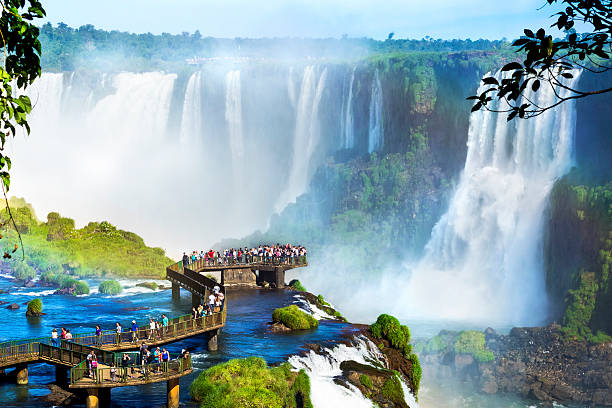
Some of the most famous UNESCO Natural World Heritage sites include Yellowstone National Park in the United States, known for its geysers and wildlife; the Galápagos Islands in Ecuador, celebrated for their unique ecosystems; Australia’s Great Barrier Reef, one of the world’s largest coral reef systems; Serengeti National Park in Tanzania, renowned for its wildlife migrations; and the Grand Canyon in the United States, recognized for its dramatic geology. Other well-known sites include Iguazu National Park in Argentina, Ha Long Bay–Cat Ba Archipelago in Vietnam, and Mount Kilimanjaro National Park in Tanzania.
Which UNESCO Natural World Heritage sites are in the United States?
The United States is home to several UNESCO-listed natural places, including Yellowstone, Grand Canyon, Everglades, Redwood, Mammoth Cave, Olympic, Yosemite, Hawaiʻi Volcanoes, and Carlsbad Caverns National Parks. It also shares two transboundary World Heritage properties with neighboring countries: Waterton-Glacier International Peace Park with Canada, and Kluane / Wrangell-St. Elias / Glacier Bay / Tatshenshini-Alsek with Canada. Papahānaumokuākea, a vast marine area in the Northwestern Hawaiian Islands, is also a U.S. World Heritage site; UNESCO classifies it as a mixed cultural and natural property.
Why are UNESCO Natural World Heritage sites important?
UNESCO Natural World Heritage sites are important because they protect places of exceptional natural value, including unique landscapes, vital ecosystems, and habitats for threatened species. Their international recognition can strengthen conservation efforts, support scientific research and education, and encourage responsible tourism. Protecting these sites also helps preserve Earth’s biodiversity and natural history for future generations.
What are the biggest threats facing UNESCO Natural World Heritage sites?
UNESCO Natural World Heritage sites face growing threats from climate change, habitat destruction, pollution, invasive species, and unsustainable tourism and development. Rising temperatures, droughts, wildfires, coral bleaching, and sea-level rise can damage ecosystems, while poaching, overfishing, and resource extraction put wildlife and habitats at risk. These pressures often overlap, making effective protection dependent on long-term conservation planning, adequate funding, and cooperation with local and Indigenous communities.
