
Intelligence: A Many-Sided Human Ability
Intelligence is often described as the ability to learn, understand, reason, and adapt. It helps people make sense of information, solve problems, and respond to new situations. But intelligence is not a single, simple trait. It includes a range of abilities, and people may show their strengths in different ways.
More Than a Test Score
Standardized tests can measure certain skills, such as verbal reasoning, pattern recognition, or working with numbers. These measures can be useful in specific settings, but they do not capture every ability that matters in life. Creativity, practical judgment, communication, curiosity, and persistence can also help people meet challenges and achieve goals.
Intelligence should not be confused with knowledge. Knowledge is information a person has learned; intelligence also involves how that information is understood and used. A person may know a great deal about one subject while still being new to another. Learning continues throughout life, and experience can change how people approach problems.
How Intelligence Develops
Intellectual development is shaped by a combination of influences, including biology, education, relationships, health, and life experience. No single factor explains a person’s abilities or potential. Access to supportive learning environments, opportunities to practice, and encouragement to ask questions can all help people develop their skills.
Intelligence is not necessarily fixed in every practical sense. People can build knowledge and improve particular abilities through study, feedback, and practice. The pace and ease of learning vary, but mistakes can provide useful information about what to try next.
Different Strengths, Different Approaches
One person may excel at recognizing patterns, while another may be especially skilled at explaining ideas, designing useful solutions, or understanding other people’s perspectives. These strengths can complement one another. In workplaces, classrooms, and communities, diverse ways of thinking can lead to better questions and more creative solutions.
Recognizing different abilities also means avoiding overly simple labels. A test result or a moment of difficulty cannot define a person’s full capacity. Performance may change depending on the task, the environment, a person’s health, and the resources available.
Intelligence in the Age of Technology
Artificial intelligence has made the word “intelligence” even more complex. Computer systems can identify patterns, generate text, and perform tasks that once required human effort. These capabilities can be valuable, but they are not identical to human understanding. Technology operates within the limits of its design, training, and available information, and its results may require careful review.
Using intelligent tools effectively involves more than getting an answer. It requires asking clear questions, checking important claims, recognizing uncertainty, and applying human judgment. As technology advances, critical thinking and responsible decision-making remain essential.
A Broader View
Intelligence is best understood as a varied set of abilities that can develop and work together. It includes learning from experience, adapting to change, considering evidence, and finding ways forward when a problem is unfamiliar. A broader view of intelligence makes room for individual differences and recognizes that people can contribute in many ways.
Rather than treating intelligence as a ranking, it can be more useful to ask what someone is good at, what they want to learn, and what support will help them grow. That approach encourages curiosity, respects human potential, and helps create environments where more people can thrive.
Exploring Intelligence: Answers to 8 Common Questions
- What is intelligence?
- Are people born intelligent, or can intelligence be developed?
- What are the different types of intelligence?
- How is intelligence measured?
- What is the difference between intelligence and knowledge?
- Can intelligence change over time?
- Does a high IQ guarantee success?
- How does artificial intelligence differ from human intelligence?
What is intelligence?
Intelligence is the ability to learn, understand, reason, and use information to solve problems or adapt to new situations. It includes many kinds of skills, such as recognizing patterns, communicating ideas, thinking creatively, and making sound decisions. No single test or measure captures every aspect of intelligence, and people may show their abilities in different ways.
Are people born intelligent, or can intelligence be developed?
Intelligence is shaped by both inherited traits and life experiences, so people may begin with different strengths, but their abilities can also grow. Education, practice, curiosity, supportive relationships, and opportunities to learn can help develop skills such as reasoning, problem-solving, and memory. Intelligence isn’t fixed at birth—or limited to a test score—and people can continue learning and improving throughout life.
What are the different types of intelligence?
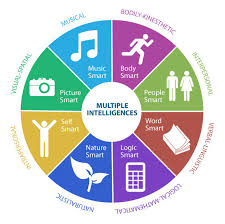
Intelligence can be understood in several ways. Some psychologists describe abilities such as verbal, logical-mathematical, spatial, musical, and bodily-kinesthetic intelligence, as well as interpersonal and intrapersonal skills. Other frameworks focus on areas like emotional or practical intelligence. These categories can be useful for discussing different strengths, but they are not universally accepted as separate, measurable types; people often use a combination of abilities that can develop through learning and experience.
How is intelligence measured?
Intelligence is commonly measured using standardized assessments that evaluate skills such as reasoning, memory, language, problem-solving, and pattern recognition. IQ tests are one familiar type of assessment, but they measure performance on specific tasks and do not capture every ability, such as creativity, practical judgment, or social skills. Results can also be influenced by factors like education, language, health, and testing conditions, so they’re best interpreted as one source of information rather than a complete measure of a person’s potential.
What is the difference between intelligence and knowledge?
Intelligence is the ability to learn, reason, solve problems, and apply ideas to new situations, while knowledge is the information and skills a person has gained through study or experience. In other words, knowledge is what you know; intelligence helps you understand, connect, and use what you know. The two can support each other, but they are not the same: someone can have extensive knowledge in a subject, while intelligence helps them make sense of unfamiliar information or tackle a new challenge.
Can intelligence change over time?
Yes, intelligence can change over time. Some abilities develop with age and experience, while others may shift with learning, health, stress, and life circumstances. Practicing skills, gaining knowledge, and taking on new challenges can strengthen particular kinds of thinking. Intelligence tests measure specific abilities at a particular time, so a score does not define a person’s full potential or capacity to grow.
Does a high IQ guarantee success?
No. A high IQ can support skills such as reasoning and learning, but it does not guarantee success. Outcomes also depend on factors such as persistence, emotional skills, creativity, health, opportunity, and support from others. Success means different things to different people, and intelligence is only one part of what helps someone reach their goals.
How does artificial intelligence differ from human intelligence?
Artificial intelligence (AI) differs from human intelligence in several key ways. AI systems are designed to process information and perform tasks based on algorithms and data, often excelling at specific, well-defined problems like pattern recognition or data analysis. Unlike humans, AI lacks consciousness, emotions, and the ability to understand context beyond its programming. While human intelligence involves creativity, emotional understanding, and the capacity to learn from a wide range of experiences, AI operates within the parameters set by its developers and cannot independently generate new ideas or adapt beyond its training data. Additionally, human intelligence is deeply connected to cultural, social, and ethical considerations that AI does not inherently possess.
