
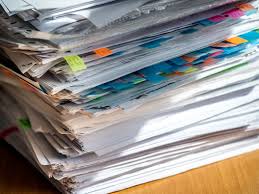
Papers: A Material That Carries Ideas Across Time
Paper is an everyday material with an extraordinary role in human history. It carries stories, records discoveries, supports art, and helps people share information. From handwritten letters and printed books to maps, certificates, and photographs, paper has served as a practical way to preserve and communicate ideas for centuries.
What Is Paper?
Paper is a thin, flexible sheet made from fibers pressed together and dried. Most modern paper is made primarily from wood pulp, though it can also be produced from recycled paper, cotton, hemp, bamboo, and other plant-based materials. The fibers form a web that gives paper its structure. Different fiber blends and manufacturing processes create papers with distinct textures, thicknesses, strengths, and appearances.
A Brief History
Early forms of writing surfaces included clay tablets, papyrus, parchment, and other materials. Paper developed in China around the beginning of the Common Era and gradually spread through trade and cultural exchange. As paper-making techniques reached Europe, paper became increasingly available. The printing press later made it possible to produce books and documents in much greater quantities, helping ideas travel farther and more quickly.
Paper has since adapted to many purposes. It has been used for newspapers, packaging, scientific records, artwork, personal correspondence, and official documents. Even as digital communication has expanded, paper remains useful for reading, writing, printing, and long-term recordkeeping.
Different Kinds of Paper
Not all paper is made for the same job. Common varieties include:
- Copy paper: A lightweight paper commonly used in printers and photocopiers.
- Newsprint: An inexpensive, lightweight paper traditionally used for newspapers.
- Cardstock: A thicker, sturdier paper used for cards, covers, and crafts.
- Coated paper: Paper with a treated surface that can produce sharper images and a smoother finish.
- Archival paper: Paper made to resist deterioration, often using acid-free materials and processes.
- Art paper: Paper designed for particular creative techniques, such as watercolor, drawing, or printmaking.
How Paper Is Made
Paper production generally begins by separating plant fibers and mixing them with water to create pulp. The pulp is spread onto a screen, where much of the water drains away. The remaining fiber mat is pressed and dried, then finished to achieve the desired thickness, smoothness, or surface treatment. Recycled paper follows a similar process, with used paper broken down into pulp before being formed into new sheets.
Manufacturers can adjust the process to make paper suited to particular uses. For example, printing paper may be treated to help ink sit cleanly on its surface, while packaging paper may be designed for strength and durability.
Paper and Preservation
Paper can last for a long time when it is made and stored well, but it is vulnerable to light, moisture, heat, pollution, pests, and rough handling. Some older papers contain acids that cause them to yellow and become brittle. For documents that need to be preserved, stable temperature and humidity, limited exposure to light, and archival-quality folders or boxes can help slow deterioration.
Preservation also involves more than protecting the sheet itself. The document’s origin, date, creator, purpose, and relationship to other records can provide essential context. Careful descriptions and digitized copies can make papers easier to discover and consult while helping reduce handling of fragile originals.
Paper in a Digital Age
Digital tools have changed how people create, distribute, and store information, but they have not made paper obsolete. Paper offers a physical reading experience, works without a device or power source, and can be especially useful for annotation and focused study. At the same time, digital copies can make documents easier to search, share, and access remotely.
Each format has its own preservation challenges. Paper can be damaged by its surroundings, while digital files depend on functioning hardware, software, and storage systems. Keeping important records in more than one format can help protect access to them over time.
Using Paper Thoughtfully
Paper production uses natural resources, including wood, water, and energy. Choosing recycled products, using both sides of a sheet, reusing suitable paper, and recycling clean paper products can help reduce waste. When selecting paper for long-term records, durability and composition also matter: a suitable archival paper can protect information more effectively than a low-quality sheet that breaks down quickly.
From a brief note to a centuries-old manuscript, papers preserve traces of human thought and activity. Their value comes not only from the material itself, but also from the information, memories, and evidence they carry.
5 Essential Tips for Writing an Effective Paper
- Choose a clear topic.
- Use reliable sources.
- Organize ideas with an outline.
- Cite sources consistently.
- Proofread before submitting.
Choose a clear topic.
Choose a clear topic before you start writing. A focused subject helps you decide what information belongs in your paper, organize your ideas, and guide readers from one point to the next. If your topic feels too broad, narrow it to a specific question or angle that can be explored within the length of your paper.
Use reliable sources.
When researching a topic or preparing a paper, use reliable sources to support your ideas. Look for information from experts, academic publications, government agencies, and reputable organizations, and check who wrote each source and when it was published. Reliable sources help you build an accurate, well-supported paper and make it easier for readers to trust your conclusions.
Organize ideas with an outline.
Before you begin writing, organize your ideas with an outline. List your main points in a logical order, then add supporting details beneath each one. An outline helps you see how your ideas connect, spot missing information, and keep your paper focused from beginning to end. It doesn’t have to be formal— even a short list can make drafting easier.
Cite sources consistently.
Cite sources consistently to make your papers clear, credible, and easy to verify. Choose the citation style required for your assignment—such as APA, MLA, or Chicago—and apply its rules throughout, including for in-text citations, footnotes, and the bibliography. Consistent citations give credit to the original authors, help readers locate the sources, and reduce the risk of accidental plagiarism.
Proofread before submitting.
Proofread your paper before submitting it. Read it slowly and check for spelling, grammar, punctuation, and formatting errors. Make sure your ideas are clear, your facts are accurate, and your citations follow the required style. A fresh review—ideally after taking a short break—can help you catch mistakes you might otherwise miss.
