
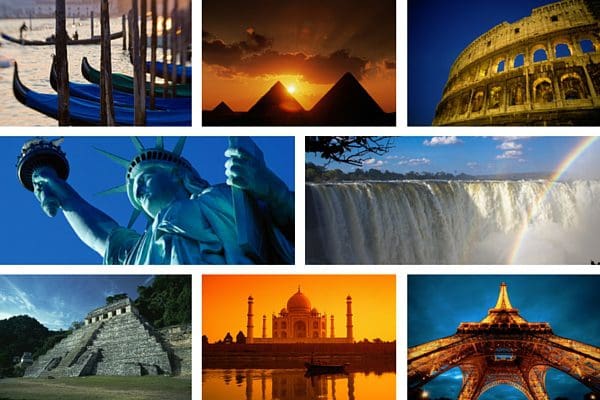
List of UNESCO World Heritage Sites
UNESCO World Heritage Sites are places recognized for having outstanding cultural or natural value to humanity. The list includes ancient cities, monuments, sacred places, national parks, and landscapes across the world. There are more than 1,200 sites, so this article offers a selection of well-known examples rather than a complete directory.
What makes a place a World Heritage Site?
A country may nominate a place for the World Heritage List. UNESCO evaluates the nomination against criteria that include artistic, historical, scientific, ecological, and cultural significance. Sites fall into three categories:
- Cultural: Human-made places or landscapes with significant historical, architectural, archaeological, or cultural value.
- Natural: Areas valued for their natural features, ecosystems, habitats, or geological importance.
- Mixed: Places that meet both cultural and natural criteria.
Notable UNESCO World Heritage Sites by region
Africa
- Rock-Hewn Churches of Lalibela — Ethiopia: A group of medieval churches carved into rock and still used as places of worship.
- Serengeti National Park — Tanzania: A vast ecosystem known for its wildlife and annual animal migrations.
- Great Zimbabwe National Monument — Zimbabwe: The remains of a major stone-built city that flourished between the 11th and 15th centuries.
- Robben Island — South Africa: A former prison and a powerful symbol of the struggle against apartheid.
- Mosi-oa-Tunya / Victoria Falls — Zambia and Zimbabwe: A dramatic waterfall and surrounding protected landscape shared by two countries.
Asia and the Pacific
- The Great Wall — China: A far-reaching system of fortifications built and expanded over many centuries.
- Taj Mahal — India: A white-marble mausoleum in Agra, commissioned by Mughal emperor Shah Jahan.
- Angkor — Cambodia: An extensive archaeological complex that includes the temple of Angkor Wat and the remains of the Khmer Empire’s capital.
- Historic Monuments of Ancient Kyoto — Japan: Temples, shrines, and other historic structures in Kyoto and nearby areas.
- Borobudur Temple Compounds — Indonesia: A major Buddhist monument known for its terraces, stupas, and carved panels.
- Kakadu National Park — Australia: A protected landscape with exceptional biodiversity and Indigenous rock art spanning thousands of years.
- Te Wāhipounamu — New Zealand: A large natural area of mountains, forests, lakes, and fjords in the southwest of the South Island.
Europe
- Acropolis of Athens — Greece: An ancient citadel featuring landmarks such as the Parthenon.
- Historic Centre of Florence — Italy: A city center celebrated for its Renaissance art, architecture, and urban history.
- Stonehenge, Avebury and Associated Sites — United Kingdom: Prehistoric monuments and landscapes that offer evidence of ancient communities and ceremonial practices.
- Alhambra, Generalife and Albayzín, Granada — Spain: A historic ensemble reflecting the city’s layered Islamic and Christian heritage.
- Mont-Saint-Michel and its Bay — France: A tidal island crowned by a medieval abbey and surrounded by a distinctive coastal landscape.
- Plitvice Lakes National Park — Croatia: A natural area known for its linked lakes, waterfalls, and forest habitats.
North and South America
- Yellowstone National Park — United States: A protected area known for geothermal features, including geysers, as well as abundant wildlife.
- Grand Canyon National Park — United States: A vast canyon landscape exposing layers of geological history.
- Canadian Rocky Mountain Parks — Canada: A group of mountain parks with glaciers, alpine lakes, and important fossil sites.
- Chichén-Itzá — Mexico: A major Maya archaeological site featuring the pyramid known as El Castillo.
- Galápagos Islands — Ecuador: An island ecosystem celebrated for its distinctive wildlife and contribution to the study of evolution.
- Historic Sanctuary of Machu Picchu — Peru: An Inca site set high in the Andes, surrounded by a rich natural environment.
- Old Havana and its Fortification System — Cuba: A historic urban center with plazas, colonial architecture, and defensive structures.
Arab States
- Petra — Jordan: An ancient Nabataean city, famous for buildings carved into rose-colored rock.
- Ancient Thebes with its Necropolis — Egypt: A major archaeological area that includes temples and tombs near modern-day Luxor.
- Historic Centre of Tunis — Tunisia: A historic medina with mosques, palaces, markets, and traditional residences.
- Wadi Rum Protected Area — Jordan: A desert landscape of sandstone formations, archaeological remains, and cultural significance.
How to find the complete list
This selection is not exhaustive, and the World Heritage List changes as new sites are added and existing sites are reviewed. For the complete, current directory—including site descriptions, maps, countries, and official status—visit UNESCO’s World Heritage List at whc.unesco.org/en/list.
Whether they protect a historic city, a sacred monument, or a rare natural landscape, World Heritage Sites help document the diversity of human history and the natural world. They also highlight the importance of preserving places that hold meaning for communities today and for generations to come.
Exploring UNESCO World Heritage Sites: Top FAQs Answered
- Which is the largest World Heritage Site in the world?
- What is the top 1 World Heritage Site?
- How many Unesco World Heritage sites are there?
- What is the 1000th World Heritage Site?
- What makes something a Unesco site?
- What is the only city with 4 Unesco World Heritage sites?
Which is the largest World Heritage Site in the world?
The largest UNESCO World Heritage Site by area is the French Austral Lands and Seas, a remote group of islands and surrounding waters in the southern Indian Ocean. Covering about 672,000 square kilometers (259,000 square miles), it is recognized for its vast, largely undisturbed marine ecosystems and important breeding grounds for seabirds and marine mammals. UNESCO added the site to the World Heritage List in 2019.
What is the top 1 World Heritage Site?
There is no official “top” UNESCO World Heritage Site. UNESCO recognizes places for their outstanding cultural or natural value, but it does not rank them from best to worst. Which site stands out most depends on personal interests—some visitors may choose the Great Wall of China, Machu Picchu, or the Great Barrier Reef for their history, beauty, or natural significance.
How many Unesco World Heritage sites are there?
UNESCO’s World Heritage List included 1,248 sites after the 2025 World Heritage Committee session. The total changes as new sites are added, so check UNESCO’s official list for the latest count.
What is the 1000th World Heritage Site?
The 1,000th property added to UNESCO’s World Heritage List was the Okavango Delta in Botswana, inscribed in 2014. This vast inland delta is renowned for its wetlands, seasonal flooding, and rich wildlife, including elephants, lions, and numerous bird species. Its recognition marked Botswana’s first World Heritage Site.
What makes something a Unesco site?
A place becomes a UNESCO World Heritage Site when it is nominated by the country where it is located and recognized as having “Outstanding Universal Value”—importance that extends beyond national borders and matters to people around the world. It must meet at least one of UNESCO’s selection criteria, which cover cultural significance, natural beauty, geological features, biodiversity, or the relationship between people and their environment. The nomination is reviewed by experts, and sites are expected to have clear boundaries, effective protection, and a plan for long-term conservation.
What is the only city with 4 Unesco World Heritage sites?
Córdoba, Spain, is sometimes described as the city with four UNESCO World Heritage designations, but that wording combines different kinds of recognition. The city’s World Heritage properties are the Historic Centre of Córdoba and the Caliphate City of Medina Azahara; the Mosque-Cathedral is part of the Historic Centre, and the Festival of the Patios is recognized as Intangible Cultural Heritage—not as a World Heritage Site.
